 ™
1Kangra Fort
The vast hilltop fort of the Katoch kings, above the meeting of the Banganga and Manjhi rivers. Climb through its old gateways to the ruined temples and ramparts, and visit the Maharaja Sansar Chand Museum at the entrance.
Old fort town of the Katoch kings – temples, tea gardens and a toy train across the Kangra valley
Kangra is an old temple and fort town in the valley of the same name, about 15 km below Dharamshala. It is known for Kangra Fort and the Brajeshwari Devi temple, and makes an easy base for the rock-cut temples of Masroor, the shrines of Jawalamukhi and Chamunda, the Pong Dam lake and the tea gardens of Palampur.
Kangra, known in old texts as Nagarkot, was the heart of the ancient kingdom of Trigarta, which is named in the Mahabharata. The Katoch Rajputs, one of the oldest ruling families in India, held the valley for centuries from their fort above the town, and the wealthy Brajeshwari Devi temple drew pilgrims from across the north.
Kangra Fort was coveted by every power in the region. Mahmud of Ghazni raided it in 1009, the Mughals took it under Jahangir in the early 1620s, and the Katoch ruler Sansar Chand won it back in 1786. After a long Gorkha siege, it passed to Maharaja Ranjit Singh in 1809, and the British took it in 1846 after the First Anglo-Sikh War.
Under Sansar Chand’s patronage the valley became the home of Kangra miniature painting – the finest flowering of the Pahari school, with soft colours, lyrical scenes of Radha and Krishna and the green Kangra hills in the background.
The great Kangra earthquake of 4 April 1905 brought down much of the fort, the town and the Brajeshwari temple, and killed around 20,000 people across the region. The temple was rebuilt, and the fort’s ruins still stand on the ridge between the Banganga and Manjhi rivers.
Kangra is pleasant from October to April and warm but fine in May–June. The monsoon (July–September) is heavy, so plan temple and fort visits for the drier months.
Green valley and snow on the Dhauladhar behind the fort – great for photos.
Fine for temples in the morning and evening; head up to Dharamshala or Palampur in the afternoon.
Lush but wet; landslides can close hill roads. The Navratri fairs at the Devi temples start in autumn.
Crisp skies, Navratri at Brajeshwari, Chamunda and Jawalamukhi, and good light at Masroor.
No snow in town but snow-capped peaks; migratory birds at Pong Dam lake.
About 10–12 km from Kangra town (20–30 min by taxi)
Both toy train stations are within a few km of the town. Pathankot, the nearest broad-gauge station, is about 90 km away (2.5–3 hours by road). The Pathankot–Joginder Nagar toy train restarted through services in 2026 after a long break – check the current schedule before planning around it.
Kangra bus stand (in town) – HRTC and private buses to Dharamshala, Palampur, Jawalamukhi, Pathankot, Chandigarh and Delhi. Local buses and shared taxis run often to Dharamshala and Gaggal; taxis are the easiest way to reach Masroor, Pragpur and Pong Dam.
| From | Distance by road | Travel time |
|---|---|---|
| Delhi | About 455 km | 10–11 hours (overnight bus) |
| Chandigarh | About 225 km | 5–6 hours |
| Amritsar | About 200 km | 5 hours |
| Pathankot | About 90 km | 2.5–3 hours |
| Dharamshala | About 15 km | 30–40 min |
| Palampur | About 36 km | 1–1.5 hours |
| Shimla | About 220 km | 6–7 hours |
| Manali | About 230 km | 6–7 hours |
Distances and times are approximate and change with traffic and weather.
The vast hilltop fort of the Katoch kings, above the meeting of the Banganga and Manjhi rivers. Climb through its old gateways to the ruined temples and ramparts, and visit the Maharaja Sansar Chand Museum at the entrance.
One of the most revered Devi temples in Himachal, rebuilt after the 1905 earthquake. The lanes leading up to it are lined with stalls selling offerings, sweets and brassware; it is busiest during the Navratras.
A group of 8th-century temples carved out of a single sandstone ridge, often called the Ellora of the Himalaya. A rectangular pool in front reflects the carved spires with the Dhauladhar behind – go in the late afternoon for the light.
A famous Shakti Peeth with no idol – the goddess is worshipped as small blue flames that burn from natural gas vents in the rock. Expect long queues on weekends and during the Navratras.
A popular shrine to Goddess Chamunda on the bank of the Baner river, with a bathing ghat and the Dhauladhar close above. The temple runs a free langar at lunch and dinner.
A stone Shiva temple built in 1204 in the Nagara style, still in daily worship, with fine carvings on its walls. Shiva is worshipped here as Vaidyanath, the lord of healing, and the temple draws big crowds on Mahashivratri.
A huge reservoir on the Beas and a Ramsar wetland, where tens of thousands of migratory birds such as bar-headed geese spend the winter. Watch from the shore at sunrise or sunset, or join a boat ride where available.
A narrow-gauge line opened in 1929 that winds about 160 km from Pathankot to Joginder Nagar over hundreds of bridges. Ride the slow, scenic stretch from Kangra towards Palampur and Baijnath with the snow peaks outside the window.
Rolling estates of Kangra tea below the Dhauladhar. Walk the garden paths, visit a working tea factory to see the leaves processed, and buy fresh green and black tea to take home.
India’s first notified heritage village (1997), with cobbled lanes, slate-roofed havelis and a central water tank called the Taal. Pair it with nearby Garli for more old mansions.
A quiet village founded as an artists’ colony by the Irish actor Norah Richards in the 1930s. See the Sobha Singh Art Gallery and the Andretta Pottery studio, where you can watch potters at work or join a short class.
One of the world’s top paragliding sites – tandem flights take off from Billing at about 2,400 m and glide down to the fields of Bir. Bir also has Tibetan monasteries and relaxed cafés for a longer stay.
Timings and entry fees change – please check locally before you go.
| Item | Cost | Note |
|---|---|---|
| Stay (homestay / hotel) | About ₹1,200–3,000 / night | Heritage stays near Pragpur cost more |
| Food | About ₹300–700 per person / day | Try Kangri dham at a local dhaba |
| Taxi for the day | About ₹2,500–3,500 | Covers fort, Masroor and temples |
| Taxi Kangra airport → town | About ₹500–800 | About 10–12 km |
| Kangra Fort ticket | Small fee | Check at the gate |
| Weekend for 2 (approx.) | ₹8,000–14,000 | 2 nights’ stay + food + a taxi day (travel to Kangra extra) |
Costs are rough estimates for Oct 2026 and vary by season and festival days.
Kangra, Dharamshala or Palampur? All three are close – here’s which suits you.
| Place | From Chandigarh | Vibe | Best for |
|---|---|---|---|
| Kangra | About 225 km, 5–6 h | Old temple and fort town, local feel | History, temples, a central base |
| Dharamshala | About 240 km, 6–7 h | Tibetan culture, cafés, trekking | Triund, McLeod Ganj |
| Palampur | About 250 km, 6–7 h | Tea gardens, cooler and quieter | Families, gentle walks |
| Bir Billing | About 250 km, 6–7 h | Laid-back village | Paragliding |
Stay in or near Kangra town for the fort and Brajeshwari temple, with Dharamshala and the airport both close by. Pick a farm or village homestay in the valley for quiet evenings and views of the Dhauladhar, or Pragpur for a heritage stay. Kangra is also a central base for day trips to Palampur, Masroor and Jawalamukhi.
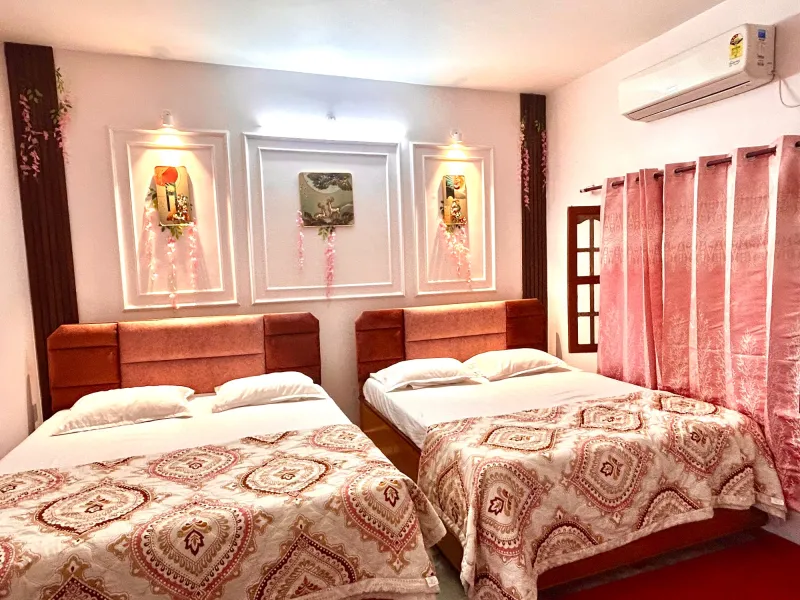 Founding Member
Shubham guest house
Kangra · Guest House
Pay ₹0 now · pay at the stay
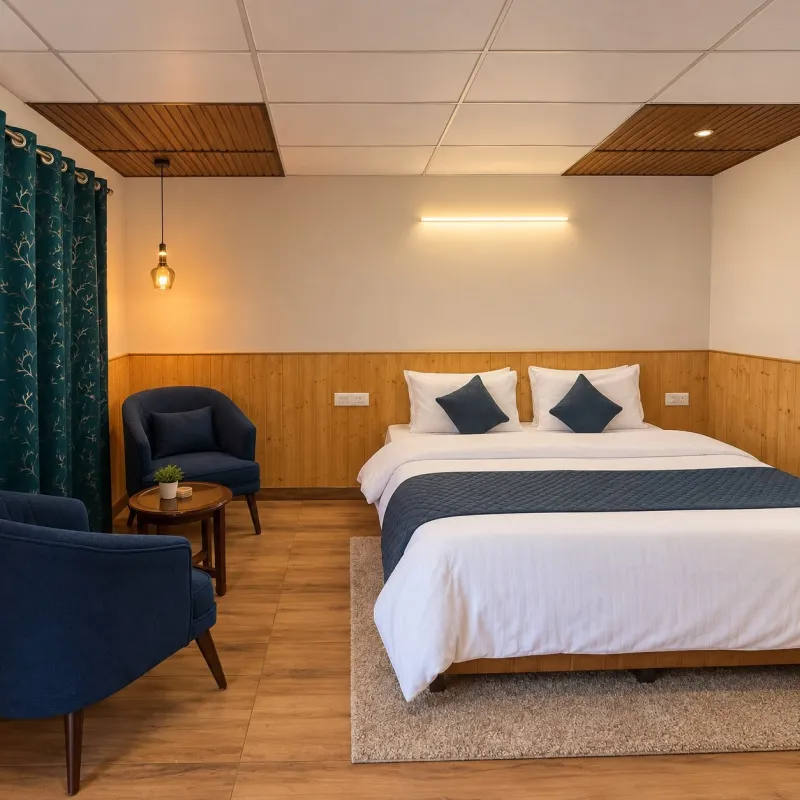 Founding Member
Sukoon-E-Mehfil
Kangra · Cottage
₹0 to book · 10% advance after host confirms
Own a homestay or hotel in Kangra? List it with Stay in Bharat
Last updated . All city guides